 Dlightning
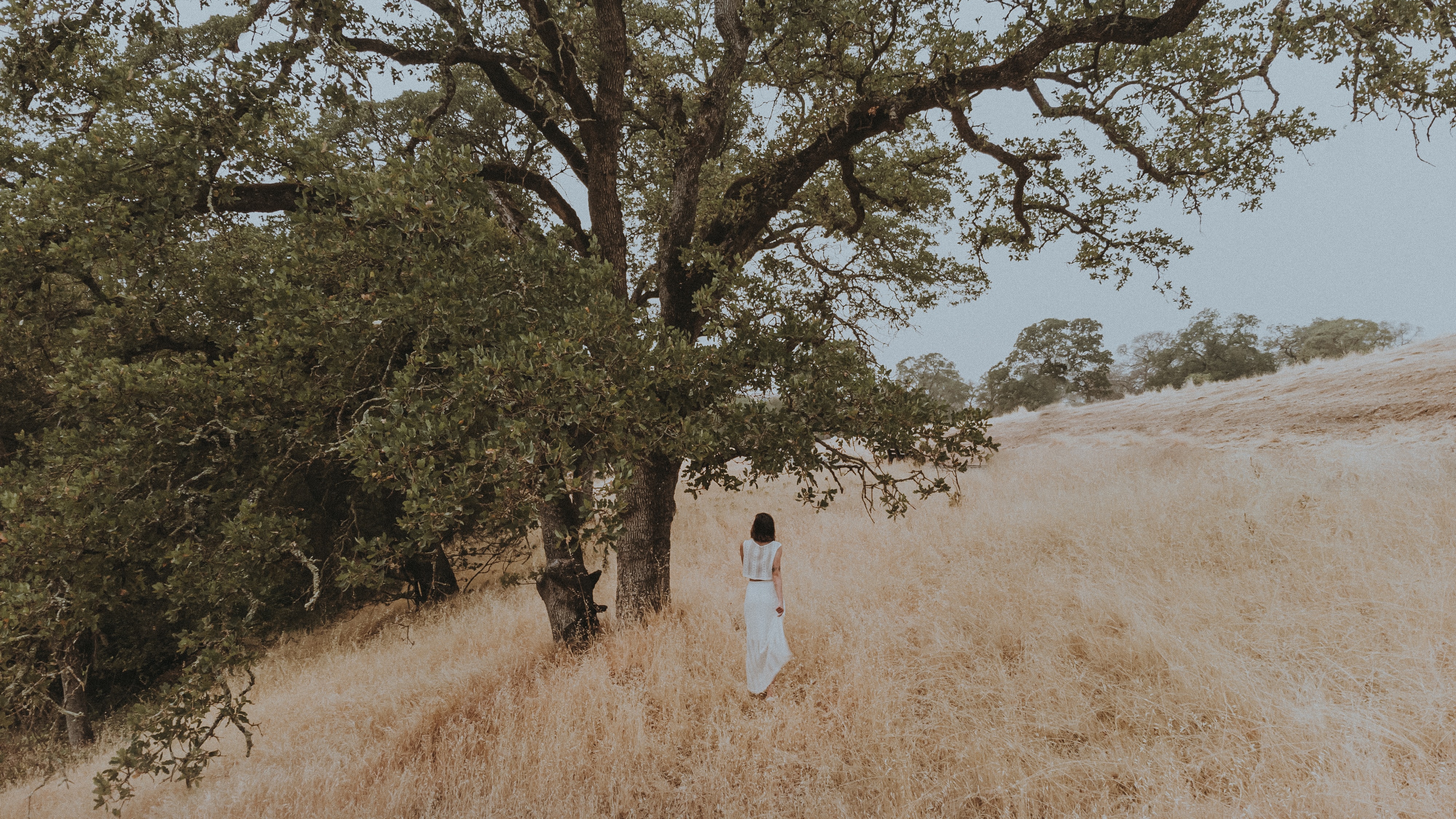
The wilderness the first colonists wrote home about, all that endless untouched forest, was not untouched. It was tended. The open oak groves you could ride a horse through, the park-like woods thick with game, the meadows that seemed placed there for grazing: people made those, over thousands of years, with fire and hand and patience. The land looked pristine because the ones who had shaped it were mostly already dead. Disease ran ahead of the settlers and emptied the continent by as much as nine in ten before most Europeans ever saw it. What they took for virgin wilderness was a garden whose gardeners had lately been buried.
I start there because almost everything we believe about living lightly rests on the opposite story. That story says nature is the pure thing and people are the stain on it, so the most a decent person can manage is to take less, tread softer, shrink. Recycle the container. Fly a little less. Leave no trace, as though the highest use of a human being on this earth were to cross it without being noticed.
There is another record, and it does not read like an apology.
In the northeast corner of Wisconsin there is a forest the Menominee have been logging since the 1850s. Not preserving. Logging, commercially, for going on two centuries. They have pulled billions of board feet of timber out of it, and there is more standing timber in that forest today than the day they started. They cut the trees that need cutting, leave the ones doing the most work, and measure the harvest in the health of the whole rather than the yield of the season. A hundred and seventy years of taking, and the forest is richer for their hands, not poorer.
Go south, to the Amazon, a place we are taught to picture as the last great untouched wild. Much of it is an orchard. The people who lived there for thousands of years planted and favored the trees that fed them, until cacao, Brazil nut, and açaí made up a startling share of a canopy that still reads, to an outside eye, as pure wilderness. And they built the ground itself: terra preta, a black earth laced with charcoal and broken pottery, made on purpose, so fertile that farmers dig it up and sell it today. They did not find abundance and fence it off. They manufactured it, and the system outlived the people who made it by centuries.
So the choice was never between using the land and leaving it alone. That was always a false pair, and it has poisoned the whole idea of sustainability from the inside. It taught us to picture ourselves as a subtraction, to measure virtue by how small we can make our mark. The division that matters runs between the hand that takes and leaves less, and the hand that takes and leaves more. To leave a place richer is to push the way the living world was already headed. More life, more complexity.
People have done it, on real ground, for longer than any nation on earth has existed. It asks something the extractive approach never does: that you know the place, that you stay long enough to see the results of what you did, that you plant for a harvest you may not be alive to cut.
What actually stops us isn't ignorance. It's that we've been sold a different life and told it's the only one on the menu. The frictionless morning. The thing at the door by tomorrow. The feed that refills forever, the self you assemble out of what you buy. It's a good con, because it runs on a real hunger. We do want more life, more intensity, more meaning. What the con sells back is a counterfeit of that exact hunger: convenience standing in for freedom, an endless feed standing in for anyone real. It hands you the packaging of the life you want and keeps the thing itself.
We can have more, and it is allowed. Not the kind that arrives at the door. The kind you build with your hands, over years.
Nobody ever stood in an old forest they had helped keep alive and felt the particular emptiness that waits at the bottom of a shopping cart, the deflation that arrives the instant the thing you wanted is finally yours. Those two feelings are not on the same scale. One is what we are actually built to want. The other is what gets sold to us, because it can be sold. A culture will always offer you the version of your desire that turns a profit, and call the rest naive.
You can tell the two apart by a single test, and it has nothing to do with virtue. One of these lives has to be met directly, on real ground, in your own body and your own attention. The other can be delivered. Anything that arrives finished, through a screen or a checkout, is a report of an experience, not the experience itself. You can gather a thousand of them, tell yourself you've lived, and not one will have touched you. An experience is a thing you are changed by.
Which is why I can't tell sustainability as a story about doing less. Less is what you offer a life you've already given up on. The truer invitation is bigger than the thing it replaces, not smaller: a life measured by what you can grow, mend, feed, and hand on in better shape than you got it. That is not a poorer life than the one on the screen. It is enormously larger, and it has the further virtue of being real.
The land practices that leave a place richer than they found it share a single refusal. They will not treat the living world as raw material with a price and nothing else. They treat it as something you are in relationship with, which is to say something you owe. California's native peoples burned the understory on a schedule for millennia, and the oaks they tended fed nearly everything around them, and the fires that terrify us today are partly the interest come due on a century of ordering them to stop. The knowledge to live otherwise was never lost. It was outlawed, then forgotten on purpose, because it could not be made to pay out quarterly.
Here's the part the story of progress can't afford to hold: the way forward is a way back. Not to some prehistoric hardship, but to knowledge that was working the day it was outlawed. We aren't inventing this way of living. We're exhuming it, out of the same ground that buried the first gardeners.
None of this waits on permission. It never has. No agency is going to certify a better way of living and mail you the license for it. The forests and the black earth were not built by policy. They were built by people who decided how they were going to live, then lived that way long enough for the ground to answer. Decide, and then stay.
You don't need a continent. You need the patch you actually touch: the work you make, the ground under you, the people downstream of your choices. Tend that as though you meant to leave it richer, and you've already crossed over. Leave more than you found. Then do it again the next year, and the year after, until leaving-more is the ordinary shape of a life, and the old subtracting one looks like what it always was, a small grey thing sold to you by people who were counting on you never to notice the difference.
Here it is. The fuller life was never the one for sale. It was in the ground you already stand on, waiting for you to stop shrinking and start tending it.