 Dlightning
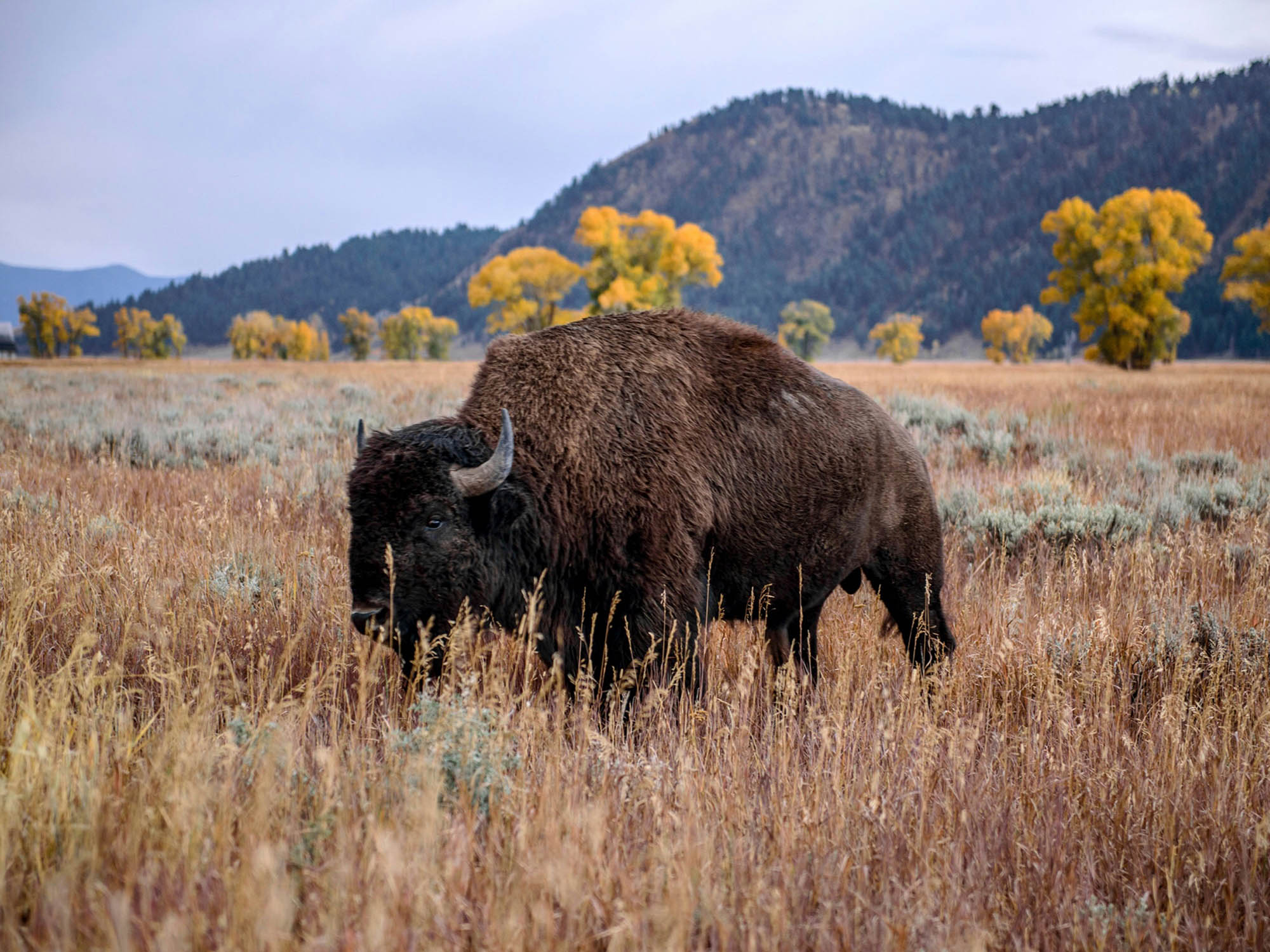
The American bison moving across the tallgrass prairie doesn't pause to contemplate the intricate web of relationships that sustain its world. The herd responds to wind patterns, to the scent of wolves, to the subtle shifts that signal safety or danger. Each animal operates on instinct refined across millennia, processing environmental signals with a precision that would humble our most sophisticated sensors.
But watch the wolves, and you see something different entirely.The wolf pack must predict. They study the bison's habits, noting where the herd drinks, how they move when storms approach, and which routes they favor when calves are young. The wolves are observers by necessity—their survival depends on understanding not just what the bison do, but why they do it.
When post-Civil War Americans in the late 1800s realized the near-extinction of the American bison was unfolding before them, those who truly observed the unfolding catastrophe sought to preserve what remained. Empathy, born from careful attention, led to extraordinary action—a military guard was stationed to protect the final 23 bison in Yellowstone National Park.
The Invisible Network
What emerged from decades of ecological study was a revelation that would have delighted Darwin: the bison and wolves weren't just predator and prey locked in simple opposition. They were partners in an intricate dance of mutual dependence.
The grasses benefit from the bison's rotational grazing. Their hooves aerate soil and their manure enriches it. Insects spawn in bison dung, creating food webs that support ground-nesting birds. The paths worn by massive herds channel water flow, shaping streams and riparian zones that sustain countless other species.
Yes, the wolves need the bison for food. But here's what's less obvious: the bison need the wolves too.
A top predator keeps the herd healthy, culling the sick and weak. Wolf presence regulates movement patterns, preventing overgrazing in sensitive areas. The constant, low-level pressure of predation maintains the vigilance that keeps the entire herd sharp, responsive, alive.
Remove the wolves, and the bison herd becomes less adaptive, less resilient, ultimately less capable of surviving the unexpected.
The Observer's Paradox
What strikes me about this ecological web is how invisible the connections remain until someone takes the time to really watch. The casual observer sees bison grazing and wolves hunting. The careful observer sees a system where every element shapes every other element, where survival depends not on individual strength but on the health of relationships.
This is the designer's dilemma. We're asked to create interfaces for humans whose needs are as interconnected and context-dependent as any prairie ecosystem. Yet we often approach design as if users were isolated entities, making decisions in vacuum chambers rather than navigating complex webs of competing priorities, shifting contexts, and social pressures.
The bison herd operates as a collective intelligence far beyond our current understanding. Networks of sensing lend immediate experience to the group. Individual bison don't need to comprehend the entire system, they just need to stay connected to it.
What the Prairie Knows
By no means are bison simplistic creatures. Their apparent simplicity is actually sophisticated responsiveness—the ability to react appropriately without overthinking. They've evolved to be exactly as complex as their environment demands, no more, no less.
If we can't feel confusion, frustration, or the small panic of being lost in an interface, then how can we feel the satisfaction of clarity, the pleasure of smooth interaction, or the confidence that comes from understanding exactly what will happen when we act?
The wolf understands this. Every hunt is a study in reading subtle signals, in understanding how environmental pressures shape behavior, in predicting how a complex system will respond to intervention.
The question is whether we're observing carefully enough to see the systems our users are actually navigating, rather than the simplified version we've imagined.
The Grand Design
There is indeed a grand design to the ecological web carefully crafted because one earthly being stays in tune with another. Adaptation through attention. Survival through connection.
This is what Darwin understood: the power isn't in the individual elements but in their relationships. The magic happens in the spaces between things, in the feedback loops and dependencies that create resilience.
The designer who learns to see like a wolf, to study what users do and why they do it, how context shapes choice, how one interaction ripples through the entire experience, begins to work with these invisible networks.
The designer who remembers that users are already perfectly adapted to their environment and that our job is to align with that intelligence rather than override it can create interfaces that feel less like obstacles and more like natural extensions of thought.
The Last Twenty-Three and Me
When I think about those final 23 bison, protected by armed guards in Yellowstone, I wonder what kind of observation, what depth of understanding, led someone to recognize that saving them was this important. Did they know preserving a single species would be the same as maintaining the integrity of an entire system?
It wasn't causal. It was the kind of patient, careful watching that reveals connections invisible to the hurried glance. The kind of attention that sees not just what is, but what could be lost.
In our own digital prairie, we're surrounded by users who have adapted remarkable strategies for navigating complex systems. They've developed collective intelligence, informal networks, workarounds that often work better than our intended flows.
The question is whether we're watching carefully enough to learn from them.