 Dlightning
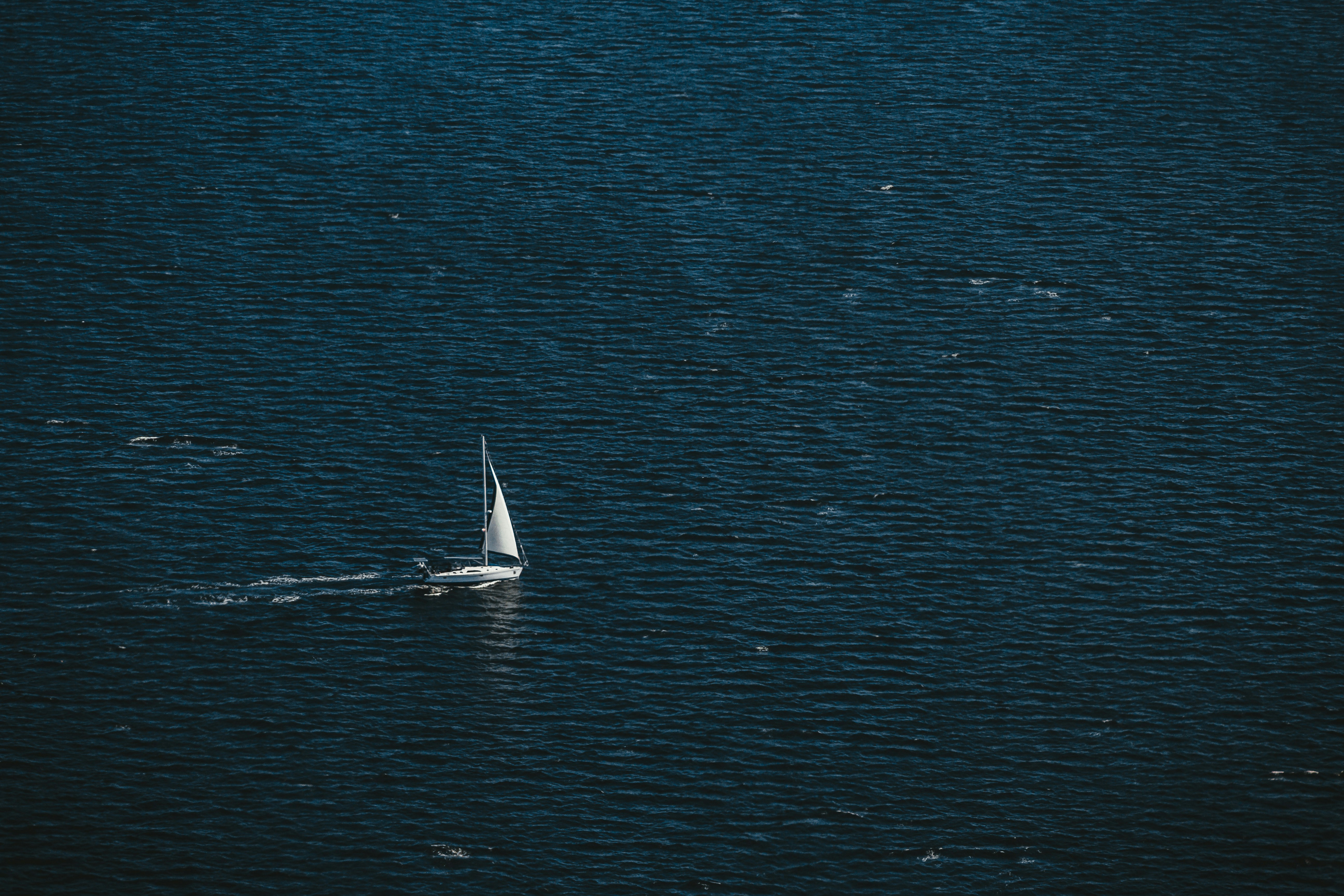
Imagine you awaken to find yourself on a boat far out at sea and you are the only human onboard. The tiny sailing vessel, one you could reasonably pilot yourself, bobs up and down on an open blue ocean with no shore in sight. Wait, scratch that, you are watching another person in this predicament—your view is an empathetic third-person omniscient—you see and share the feelings of a frightened human lost at sea.
Our unwitting sailor is surrounded by ropes (sheets and rigging) leading to a mast and winch that, when engaged, tightens the sheet and raises the sails. Mechanisms needed to pilot a sailboat surround them. Orienting themselves, they steady their sea legs and look around. With no prior experience sailing a ship, beyond rowing a kayak, the landlubber is unsure of where to start. Realizing the full weight of the predicament and with an eagerness to survive, they reason based on limited knowledge. Their best course of action is to experiment while avoiding something irreversible or fatally incorrect; they're timid to act. “What happens when I crank this winch just a little?” they think.
When customers enter into an application for the first time, especially one where there is a chance to break something, they can become paralyzed, afraid. A sailor has a word for this: in irons—the bow pinned into the wind, the sails gone slack, the boat dead in the water no matter how badly you want to move. New information surrounds them and they can’t quite understand which button to push to reach their destination. Relying on visual cues and knowledge gained from life experience is their best attempt to make sense of a new interface. As if they were lost at sea, there is an immensity that surrounds them and it may feel as if there is no one to answer their cries for help.
Now our novice sailor has found the bridge, navigation seems simple enough, North, East, South, West, ignoring submenus (NE-SE-SW-NW). They figure going due East is the best course of action, it’s only a 50/50 shot that they'll have to cross an entire ocean.
Let’s imagine now that our sailor finds a pamphlet on how to sail a ship and reads the whole thing just as a gust of wind rips it from their hands and lands it in the ocean. The pamphlet used terms like jib, tack, helm, keel, boom, starboard, and port and now they're feeling even more lost. Don’t forget, their life's on the line here. What they remember is halyards are the lines that hold up the sail. They're surprised to learn that the strongest force for forward propulsion in this triangular sail ship is at a ninety degree angle to the wind, an unexpected tidbit.
With jargon in disappearing instructions (like a modal popup) the user is left in worse shape than before. If “new” terminology is crucial for communicating and interacting with specific parts of a system, the customer is better served if those terms are introduced during a moment of important decisions.
Experience designers understand that a new interface is intimidating and recognize where the user is trying to “sail,” to make that process as simple as possible.
The sailor no longer in irons, begins tack-turning the bow across the wind and back again, making for the horizon in long diagonals, because the one place they most want to go is the one place the wind won't let them point. Progress, it turns out, is rarely a straight line.
How many fathoms deep does this analogy go? The hull of the ship, that is the browser window. The deck is the home page, and the lower decks are the pages nested beneath it. The portholes are links to other sites. The anchor is a bookmark, a place you can always return to. The bridge is the navigation bar, where the steering happens. The lifeboat is undo/redo functionality, the thing that makes a fatal mistake survivable. And the rudder is the invisible hand of the designer.
The designer walked this deck before our sailor ever woke on it to coil the right line within reach, knew the wind would come abeam and aimed the bow east, just where the sailor was headed. The sailor will never meet them, never thank them. But the boat holds together, the heading is true, and the shore, when it finally rises out of the water, was never as far as it felt.
We made one of those calmer seas. If you like an ocean where the only thing to do is watch the shore come alive, that’s Oasea.